

Responsibility and Agency in Leadership

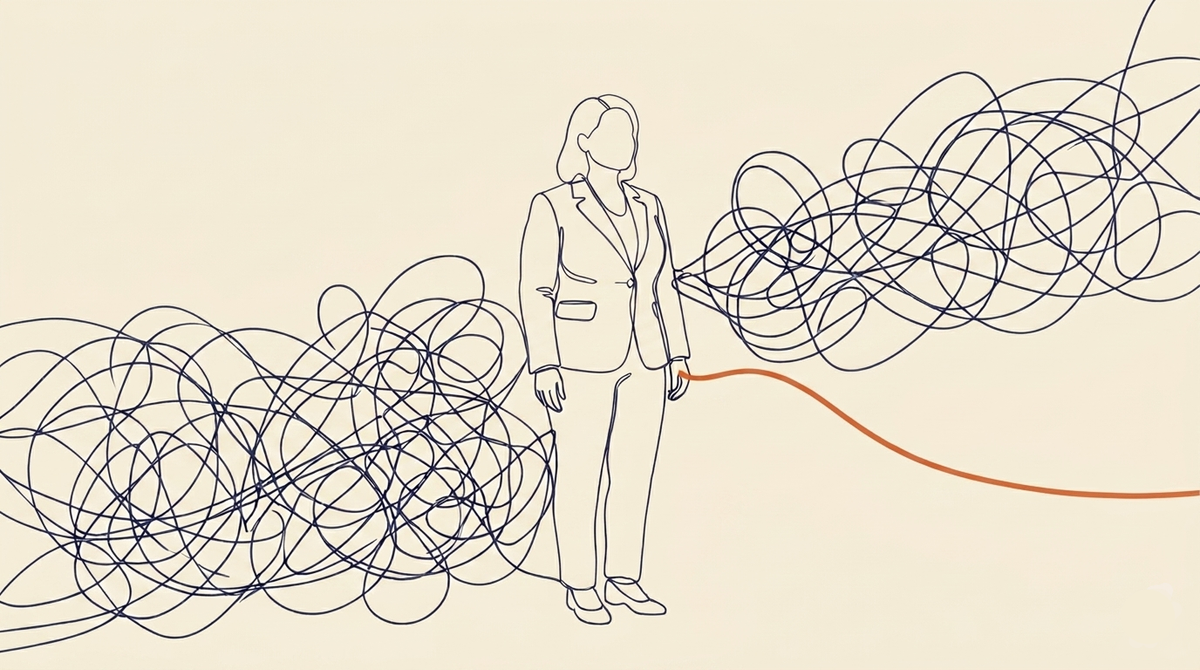
Most of the leaders I sit with are deeply capable and deeply caring. The deliverables land, the team is functioning, the results come in. All of that is real.
And yet, underneath, so many of them feel like they're holding something that's about to fall. They check in more than they need to, rewrite what didn't need rewriting, stay late not because there's more to do but because leaving feels like abandonment. I know the feeling from the inside. It has nothing to do with the volume of work. It's a responsibility problem, the weight of a leader carrying far more than is actually theirs.
The Confusion Between Responsibility and Control
Leaders often arrive at over-responsibility through the same door: competence.
Early in their careers, taking on more than was asked of them worked. It built a reputation. It accelerated their development. The people around them trusted them more because they could see the leader was reliable: things would not slip, gaps would be covered, problems would be solved.
The behaviour that got rewarded was: if something is at risk of not happening, make it happen yourself.
That behaviour becomes a problem at a different level of leadership, where the scope is too large for any one person to cover, where the real work requires others to carry genuine ownership, and where the leader's presence in every decision is not protection but interference.
But the pattern is old. It has an identity attached to it. It's how this person has always led. And so they carry it forward, into contexts where it no longer serves, and call it responsibility.
What it actually is, in most of these cases, is control.
Control doesn't feel like control from the inside. It feels like conscientiousness. It feels like caring deeply about the outcome. It feels like knowing that if you hand this over, it won't be done the way it needs to be done, and the gap will be yours to live with.
All of that may be true. And it is still control.
Over-responsibility is responsibility mistaken for control: carrying far more than is actually yours, a habit taken on so early and rewarded so often that it stops feeling like a choice and starts feeling like who you are. It looks like conscientiousness and feels like care, which is what makes it hard to see. But holding what was never yours to hold isn't responsibility. The truer responsibility is to return what belongs to others and reclaim the agency it quietly costs you.
What Agency Actually Is
Agency is the felt sense that you have choice, not just obligation. That your actions are genuinely yours, generated by your values and your judgement, rather than by the pressure of circumstances you can't escape.
Leaders with genuine agency can choose to take on more or choose to hand something off, and both feel like legitimate options. Leaders without agency feel like the work is happening to them. The decisions pile up. The to-do list has its own gravity. The workday has a shape that was designed by someone else and has been running on autopilot ever since.
Over-responsibility is one of the most reliable ways to erode your own agency. When you're responsible for too much, your capacity for genuine choice narrows. You're reactive, not generative. You're managing, not leading. The distinction matters: managing holds things in place; leading moves things forward.
You can't move things forward when your energy is entirely consumed by holding them in place.
The Trust Underneath
Here's the uncomfortable truth I watch most over-responsible leaders reach: the real issue isn't workload. It's trust.
Specifically, trust in other people's capacity to do the work without them.
Over-responsibility is, at its core, a trust deficit, and it runs in both directions. The leader who can't hand things off doesn't fully trust their team to execute without their oversight. And they've often, through the accumulated pattern of stepping in and covering gaps, trained the team to expect that, which makes handing things off feel more risky than it actually is, because the team has never had to develop the muscle the leader has been working for them.
I've been this leader, not only sat across from him. For years, working alongside teams, I called it being responsible. I was the one who cared enough to make sure nothing slipped, or so I told myself. In hindsight, it wasn't responsibility at all. I was afraid to trust, and carrying everything was the shape that fear took.
This isn't a comfortable thing to sit with. It requires a leader to ask: how much of what I call responsibility is actually a reflection of my own limits, around trust, vulnerability, and the willingness to let something be done differently than I'd do it?
The answer is usually: more than I thought.
Over-responsibility is, at its core, a trust deficit, and it runs in both directions.
Where the Agency Actually Went
There are three consistent places where leaders give away their agency without realizing they're doing it.
The first is in the gap between request and expectation. A team member asks for input, the leader provides input, and somehow the leader ends up owning the outcome. This happens because the leader's input was so specific, so detailed, so fully formed, that it stopped being input and became instruction. And once you've instructed someone, the responsibility for the result has quietly transferred back to you.
The second is in the habit of fixing. Leaders who are skilled fixers, who see what is broken and can move quickly to address it, often don't notice the moment when the fixing becomes the job. The team stops bringing half-formed problems and starts bringing fully formed crises, because experience has told them that the leader will resolve it either way. The fixing is efficient in the short term and dependency-building in the long term.
The third is in the language of accountability. Leaders who hold themselves to high standards often construct a version of accountability that leaves no room for the learning that comes from letting things go less than perfectly. If you're accountable for everything, if every slip in quality or timing is yours to absorb, you'll never hand anything over fully. Accountability becomes a reason to stay small.
The Return to Yourself
Reclaiming agency isn't about doing less. It's a specific kind of redistribution: returning the responsibility that was never really yours to carry back to the people who should be carrying it, and rediscovering the scope of what is genuinely yours.
This is harder than it sounds. It requires tolerating a period of things being done less well than you'd have done them, which is genuinely uncomfortable for leaders who care deeply about quality. It requires conversations about ownership that can feel confrontational. It requires watching someone make a decision you'd have made differently and staying quiet.
But on the other side of that discomfort is something most over-responsible leaders haven't felt in a long time: the sense that their work is their own. That the decisions they're making are coming from their values and their judgement rather than from the pressure of a world that has learned to rely on them filling every gap.
The authority you keep looking for, to decide what's yours to carry and what isn't, was never out there to be granted. It was yours the whole time.
That's not less responsibility. That's truer responsibility, the kind that is chosen, not inherited. The kind that leaves room for the people around you to actually grow.
And it is, not coincidentally, considerably more sustainable than the alternative.
Micro-Practice
The Responsibility Audit
List three things you're currently responsible for that you wish someone else would handle. For each one, ask two questions. First: is this genuinely mine to carry, or is it mine because I've never fully trusted someone else with it? Second: what would I need to believe about that person, or about myself, to hand it over? You don't need to act on the answers immediately. You need to see them clearly first.