

When Systems Break: What Crisis Reveals About Leadership

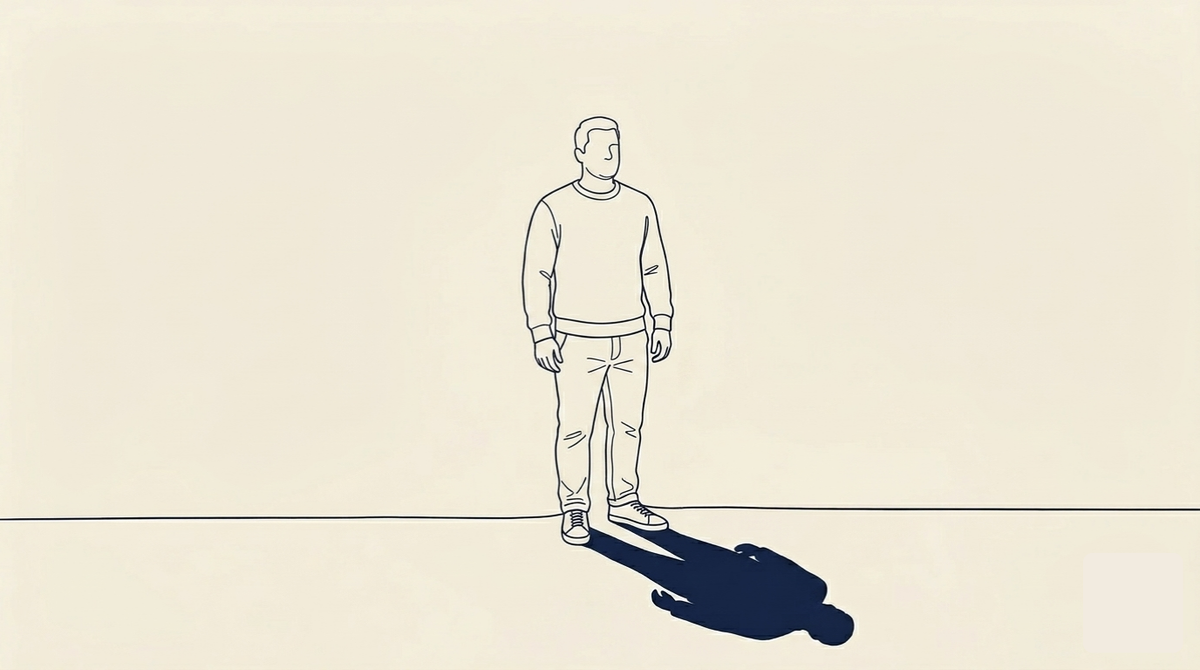
I've been a human observer for most of my life. Not the scientific kind, just someone who never stopped looking, hoping, waiting for the small slips, the moments a person's humanity breaks through the role they've chosen to stand in its place. The human slipping around the role of parent. The human slipping through the crack in the role of pastor. The human slipping out from behind the mask of the leader, the politician, the mother, the owner. I was always watching for the person underneath the part they'd agreed to play.
It started as a child's way of looking for safety. If I could read a room before it turned, catch the shift in a face a beat before it came, I could stay ahead of what might hurt. Watching was how a boy kept himself safe. What began there is the same watching that became my work, only now it points somewhere else entirely: at helping leaders remember who they really are, the humanity that was there before the role.
For thirty years now, that looking has had a professional home. The last sixteen in coaching, and all thirty in and around branding, marketing, and advisory, in rooms with leaders on their hardest days. And what I was really watching for, in all of it, were the in-between moments, the seconds when the mask slipped and they forgot to hold it up. That's where I saw them. Not the performance, the person underneath it.
I saw something in those moments I've never stopped trusting. Underneath the title, the composure, the carefully managed distance between the public self and the private one, there was always a person still there, whole, whether or not they could feel it. The steadiness some of them led with was real, built quietly over years. The steadiness others led with was performed, and it held right up until the moment it actually mattered. But the person was never the performance. The performance was only ever the cover.
That's what a crisis actually does. It doesn't make a leader, and it doesn't break one. It takes the cover off what was already there.
What Crisis Does and Does Not Do
A crisis doesn't create a leader's character, it reveals it. By stripping away the external structures that normally supply stability, a crisis exposes who a leader already was under pressure, whether that's the fear that was quietly running things or the steadiness and strength that were there all along. Wholeness under pressure isn't produced by the crisis; it's built beforehand, through interior work done in ordinary times.
It's worth slowing down on that, because we tend to believe the opposite. We talk about a crisis as the thing that forges a leader or breaks one, as if the pressure itself writes the outcome. It doesn't. A crisis has no power to make someone into who they weren't, or to unmake who they already were. What it has is the power to remove the conditions that were keeping the truth of them out of view.
It removes the scaffolding. It strips away the organizational structures, the pace, the routines, and the social contracts that normally give a leader enough external stability to function without having to reach for their own. What it reveals isn't a new problem. It's an old one the ordinary conditions of leadership were quietly keeping out of sight.
It's worth being clear about what performing actually is, because it doesn't only run in one direction. We usually picture a leader performing a strength they don't have, the calm laid over the fear, the certainty over the doubt. But just as often it runs the other way. A leader performs smallness. They shrink, they hold back, they keep a real strength out of sight, because somewhere along the line they picked up a story that it was never theirs to use.
So the crisis reveals in both directions. The leader who turns controlling under pressure was controlling all along, and the crisis just made the cost of it visible. The leader who collapses into anxiety was managing anxiety long before, not leading from stability. And the leader who finally finds their voice, who leads from a strength no one in the room saw coming, didn't come by it under pressure either. That strength was always theirs. The crisis just cleared away the story that had been keeping it hidden. They were that leader the whole time.
This is the Human Problem at its most direct: the gap between who a leader performs themselves to be and who they actually are when it matters. In ordinary times that gap is invisible, sometimes even useful. Under real pressure, it becomes the most important fact in the room.
A crisis does not create bad leaders. It reveals them. The scaffolding comes down and what was always true becomes undeniable.
The Winter We Are Living Through
I don't think I need to convince anyone that the ground is moving right now. Institutions that felt solid are showing cracks. Assumptions we'd organized whole careers around are being rewritten in real time. The quiet certainties leadership culture was built on, that performance would be rewarded, that organizations would behave rationally, that the systems would hold, are being tested in ways most of us were never trained for.
None of this is new, exactly. Every generation hits a stretch where the structures that held up the last era start to give way. What feels different this time is how much is shifting at once, and how fast, so the effects land on top of each other before we've found our footing with any one of them.
What matters here isn't the political read of any of it. What matters is the question underneath it, the one all this instability keeps pressing on a leader: who are you, actually, when the structures that have been holding you up stop holding?
That question isn't abstract. It's the most practical leadership question there is right now. And most of us haven't paused long enough, or given ourselves the permission, to listen for our real answer.
Fear Is Human. Letting It Lead Is a Choice.
Fear, in the face of real instability, isn't a leadership failure. It's a human response to real conditions. The leader who feels no fear in a crisis is either not paying attention or performing the absence of it, which is its own kind of problem.
The question was never whether a leader feels fear. It's what they do with it. Can they feel it without being run by it?
This is where a crisis does its most lasting damage, and it's almost never in the events themselves. It's in the decisions a leader makes once the fear has quietly taken the wheel, when they're moving too fast, too scared, too urgent to notice they've lost contact with their own judgement, reacting to the thing they're afraid of instead of the thing that's actually in front of them.
A leader in that state doesn't just make poor decisions. They set off a second crisis, in the trust, the coherence, the team's confidence in the room, that often outlasts the first one.
Key Insight
Fear is information. It's only a problem when the information starts making the decisions.
What Wholeness Actually Means Under Pressure
We reach for words like resilience, grit, composure. They aren't wrong, but we tend to use them to mean a kind of imperviousness: the leader who doesn't crack, who doesn't show the strain, who moves through the hard thing without visible cost.
That isn't what wholeness means. Wholeness isn't the absence of fracture. It's the capacity to integrate, to bring your thinking, feeling, and action into coherent relationship instead of letting one of them dominate at the expense of the others.
The whole leader in a crisis isn't the one who shows no emotion. It's the one who feels the full weight of the situation without being crushed by it, who can name the uncertainty out loud instead of performing a certainty they don't have, who can keep the people around them in view even while working the problem in front of them.
And sometimes the weight is the very thing that calls a leader forward. They feel the full gravity of the moment, and something in them rises to meet it, a steadiness, a clarity, a plainspoken courage they might not have known was theirs until the moment asked for it. That's wholeness too. Not the strength to stay untouched by the crisis, but the strength the crisis finally draws out.
This is not a talent. It is a practice. And it's a practice you build before the crisis, not in the middle of one.
Wholeness under pressure is not a talent. It is the accumulated result of interior work done in the ordinary times that preceded it.
The Work That Happens Before the Crisis
The most important work a leader can do right now isn't crisis training. It's the quieter work of knowing who they are when the outside structures come down.
It means getting clear on their values, not the ones they'd state out loud, but the ones that actually govern what they do when something real is at stake. It means knowing their own fear well enough to feel it coming and not be run by it. It means learning to tell real fear, the kind that's felt in the body and is naming something true about the moment, from the kind that's only a thought spun out of static, the what-ifs and the projections and the old programming narrating a danger that isn't actually in the room. And it means knowing what pulls them into reaction, and what brings them back to their own ground.
None of this is abstract. The leaders who've done this work are recognizably different in a crisis. Not because they're unmoved, but because they can be moved without being swept away.
The work I do with leaders in the ordinary times is meant to be there in the extraordinary ones. Not a script or a framework to reach for, but a way back to their own centre, the place their grounded decisions actually come from.
The Question That Remains
Leading through unstable times isn't ultimately about strategy, or communication, or any framework for making decisions. Those things matter, but they all sit downstream of something more basic: your own relationship with uncertainty, with fear, and with the question of who you are when the structures that have been holding you up stop holding.
There's something almost counter-cultural in that. We're taught to meet every hard thing by adding, another course, another credential, another framework to prove we're ready. There's nothing wrong with learning. But leading through real uncertainty asks for the opposite move: not adding more on top, but reaching underneath it, for the steadiness and the clarity and the strength that were already yours. When a crisis strips the outside supports away, the ones inside are what's left to lead from. What it points to was never something to acquire. It's what you were already carrying.
So what kind of leader do you want to be in the next stretch of instability? Not in terms of strategy or style. In terms of who you'll actually be in the room when it matters most.
That's the question a crisis shouldn't be the first to ask you. It's worth living into now, while the structures are still standing, because the self it's pointing at is already here. It was here before the title, and it'll be here after. The work is just remembering how to reach it, so that when the ground moves, you're not meeting yourself for the first time.
Micro-Practice
Return Before You React
The next time you feel the pull toward a reactive decision, the urgency, the anxiety, the need to make the discomfort go away, pause before you act. Come back to your body before you form a position. Name what you're feeling, without judging it. Then ask the question that sorts the signal from the static: am I responding to what's actually happening, or to what I'm afraid might happen? Ask what this moment actually needs from you. Then take one action from your values instead of from your fear.